
Food waste is a common problem in many households. Every week, families throw away fruits, vegetables, leftovers, and groceries that were never used. Not only does this waste money, but it also harms the environment.
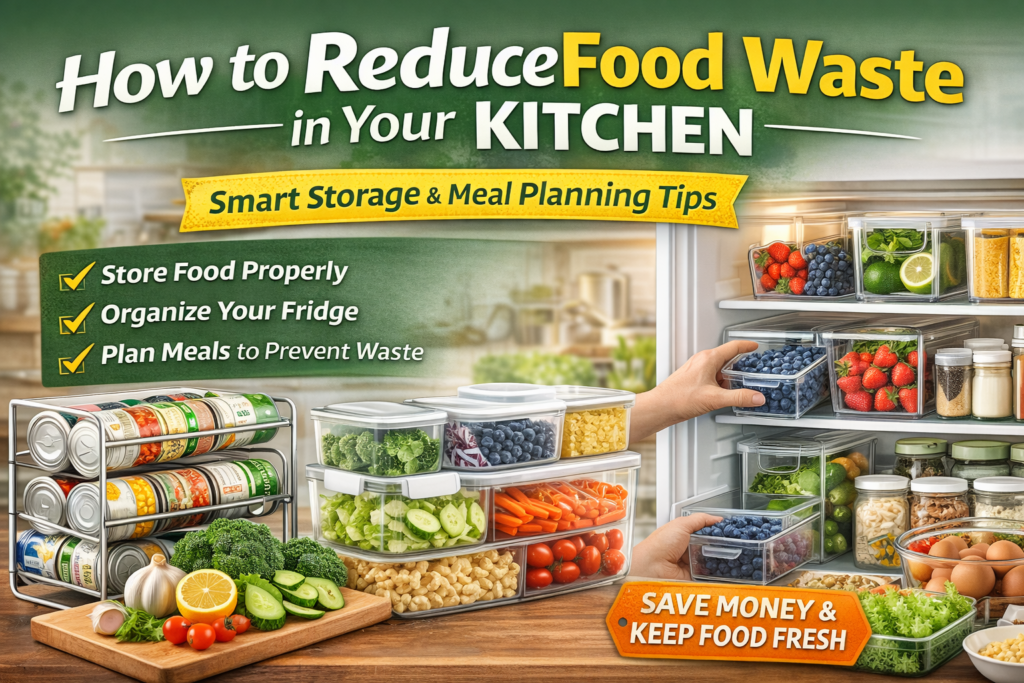
Smart Storage Techniques and Meal Planning Ideas
Learning how to reduce food waste in your kitchen is one of the easiest ways to save money, keep your kitchen organized, and live more sustainably. With a few smart habits, better food storage, and simple meal planning techniques, you can dramatically reduce household food waste.
In this guide, we’ll explore simple ways to reduce food waste, keep food fresh longer, and make your kitchen more efficient.
Why Reducing Food Waste Matters
Before diving into practical tips, it’s important to understand why reducing food waste is so valuable.
Food waste impacts:
- Your grocery budget
- Kitchen organization
- Environmental sustainability
- Household efficiency
Many people don’t realize that kitchen organization to prevent food waste is one of the most effective strategies. When your kitchen is organized and food is visible, you’re far less likely to forget items in the fridge or pantry.
1. Organize Your Refrigerator Properly
A messy refrigerator is one of the main reasons food gets wasted. When items are hidden behind others, they are often forgotten until they spoil.

- 「10 Pack Pantry Storage Containers」 The 10pcs fridge organizer helps you store fruits, vegetables, yogurt, cheese, and m…
- 「Stackable & Drain Tray Design」 Stackable design to help maximize your refrigerator storage space. The lids of fridge co…
- 「Strong Construction」Clear plastic food storage bin with an easy-grip side handle allows you to move it with ease, and e…
Fridge organization to reduce food waste can make a big difference.
Tips for organizing your fridge:
- Keep older food at the front
- Store new groceries behind older items
- Use clear storage containers
- Group similar foods together
This simple system helps you quickly see what needs to be used first and prevents food from spoiling.
2. Use Smart Food Storage Containers
Using the right containers is essential if you want smart food storage ideas for your kitchen.
Airtight containers help preserve food freshness and prevent contamination.


Benefits of proper food storage include:
- Keeping leftovers fresh longer
- Reducing moisture damage
- Preventing odors from spreading
- Improving pantry organization
Clear containers are especially useful because they allow you to easily see what food you have available.
3. Learn How to Store Fruits and Vegetables Properly
Different fruits and vegetables require different storage conditions. Understanding how to store vegetables longer can significantly reduce food waste.
For example:https://amzn.to/3MXRxiA
- Leafy greens stay fresh longer in breathable bags
- Herbs last longer when stored like flowers in water
- Berries should be kept dry until ready to eat
- Potatoes and onions should be stored separately
These small adjustments can extend the life of fresh produce and reduce the amount of food thrown away.
4. Plan Meals Before Grocery Shopping
One of the best ways to reduce food waste in the kitchen is through meal planning.
When you shop without a plan, you often buy more food than you actually need.
Meal planning helps you:
- Buy only what you will use
- Avoid duplicate purchases
- Prepare balanced meals
- Reduce grocery waste
A weekly meal plan ensures that every ingredient has a purpose.
5. Use the “First In, First Out” Rule
A simple but powerful technique used in restaurants is the First In, First Out (FIFO) rule.
This method ensures that older food gets used before newer items.
How to apply it at home:
- Move older items to the front
- Label containers with dates
- Rotate pantry products regularly
This system is extremely effective for reducing household food waste.
6. Freeze Food Before It Spoils
Your freezer is one of the best tools for preventing food from spoiling.
If you notice that food might not be used in time, freezing it can extend its life for weeks or months.
Foods that freeze well include:https://amzn.to/4b8kaCW
- Bread
- Cooked rice
- Soups
- Meat
- Vegetables
- Sauces
Freezing leftovers is also a great strategy for reducing food waste.
7. Repurpose Leftovers Creatively
Leftovers don’t have to be boring. In fact, they can become entirely new meals.
Creative leftover ideas include:
- Turning roasted vegetables into soup
- Using leftover chicken in wraps or salads
- Making fried rice with extra vegetables
- Transforming stale bread into croutons
Learning simple ways to reduce food waste often involves thinking creatively about ingredients you already have.
8. Keep an “Eat Soon” Section in Your Fridge
A practical trick used by many organized kitchens is creating an “Eat Soon” section.
This area contains foods that need to be consumed within the next few days.
Benefits include:
- Preventing forgotten food
- Encouraging quick meal ideas
- Reducing spoilage
This simple habit helps you prioritize foods that are close to expiring.
9. Store Pantry Items Correctly
Pantry organization plays a huge role in reducing grocery waste.
Pantry tips include:
- Using airtight containers
- Labeling expiration dates
- Keeping shelves organized
- Grouping similar foods together
When your pantry is organized, you avoid buying items you already have.
10. Cook Smaller Portions
Cooking too much food often leads to leftovers that never get eaten.
Instead, try:
- Cooking realistic portions
- Measuring ingredients
- Saving extra ingredients for future meals
This approach helps reduce waste while keeping meals fresh.
11. Track What You Throw Away
If you want to seriously reduce waste, start paying attention to what you throw away most often.
Common wasted foods include:
- Lettuce
- Bread
- Herbs
- Fruits
- Leftovers
Once you identify patterns, you can adjust your shopping habits.
12. Buy Groceries More Frequently
Instead of buying large quantities at once, consider shopping more frequently for smaller amounts.
This strategy helps:
- Keep ingredients fresh
- Reduce spoilage
- Encourage better meal planning
- How to Reduce Food Waste
Many people find that reducing grocery waste becomes much easier with smaller shopping trips.
13. Practice a Zero-Waste Kitchen Mindset
A zero waste kitchen doesn’t mean producing no waste at all. Instead, it focuses on minimizing unnecessary waste whenever possible.
Simple habits include:
- Using vegetable scraps for broth
- Composting food waste
- Repurposing leftovers
- Buying only what you need
Over time, these habits significantly reduce household food waste.
Start Reducing Food Waste Today
Reducing food waste doesn’t require complicated changes. With better storage solutions, smart kitchen organization, and simple meal planning habits, you can keep food fresh longer and save money every week.
👉 Upgrade your kitchen with the right food storage tools and organizers and start building a smarter, waste-free kitchen today.
Final Thoughts
Learning how to reduce food waste in your kitchen doesn’t require major lifestyle changes. Small improvements in food storage, fridge organization, and meal planning can make a huge difference.
By using smart food storage techniques, planning meals ahead of time, and organizing your kitchen properly, you can save money, reduce environmental impact, and make your kitchen more efficient.
Start with just a few changes today, and you’ll quickly notice how much less food goes to waste in your home.